There’s a persistent myth in home improvement culture that the only way to get more space is to build more of it. Add a room. Finish the basement. Put up an addition. And while those are all valid options, they’re also expensive, disruptive, and often unnecessary — because most homes are already quietly losing usable space to problems that have nothing to do with square footage and everything to do with neglect.
Think about the basement that nobody goes into anymore because it smells damp and the floor feels soft underfoot. Or the back bedroom that stays empty in winter because the windows leak cold air, no matter how many draft stoppers you wedge against them. Or the patio that looked so promising when you moved in, but now has sunken, cracked pavers that make it feel more like a hazard than a retreat. None of those spaces disappeared. They were slowly made unusable — by moisture, by structural damage, by deferred repairs that compounded over time.
The relationship between home maintenance and livable space is more direct than most people realize. When a home is properly cared for, every room functions as intended. When it isn’t, rooms start dropping off one by one — not dramatically, but gradually, in ways that are easy to dismiss until they’re impossible to ignore. This article walks through the most common ways that neglected maintenance shrinks a home, and what you can actually do to take those spaces back.
Why Moisture Is the #1 Enemy of Usable Space
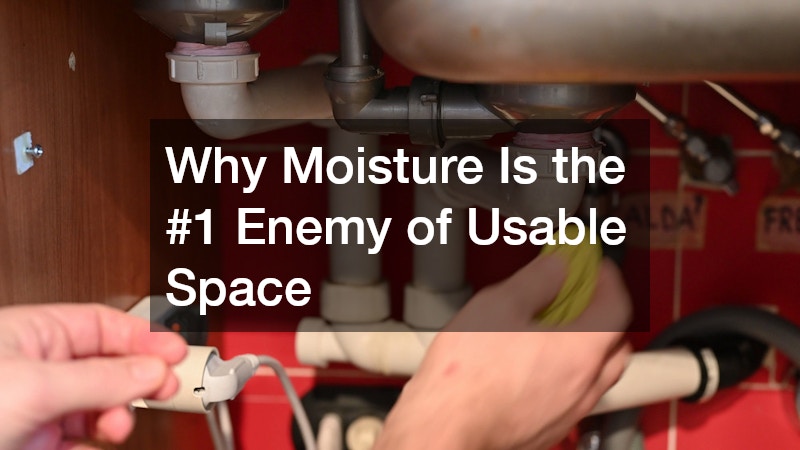
Of all the forces that can render a room unusable, moisture is the most relentless. It doesn’t announce itself. It seeps in slowly — through foundation walls, around window frames, up through concrete slabs — and by the time you notice it, it’s usually been working on your home for months.
Basements are the most obvious casualty. A basement that smells musty, shows white chalky deposits on the walls, or has paint that bubbles and peels isn’t just unpleasant — it’s telling you that water is migrating through the structure. Most homeowners respond by putting a dehumidifier down there and closing the door. That buys time, but it doesn’t solve the problem. A professional waterproofing service addresses the actual source of intrusion: exterior grading, drainage systems, wall sealants, and interior drainage channels that redirect water before it can cause damage. The difference between a basement that’s being managed and one that’s been properly waterproofed is the difference between dead storage and a real extension of your living space.
Signs your basement may need professional waterproofing include:
- A persistent musty or earthy smell, even when it hasn’t rained recently
- White or gray chalky deposits (efflorescence) on concrete or block walls
- Paint that’s bubbling, flaking, or peeling from the lower portions of walls
- Visible moisture or water stains along the base of walls or on the floor
- A floor that feels soft, spongy, or uneven in spots
But moisture threats aren’t limited to below-grade spaces. Indoor water quality plays a quieter, slower role in how well a home holds up over time. Hard water and unfiltered water supplies leave mineral deposits inside pipes and appliances, which accelerates deterioration, reduces efficiency, and leads to the kind of slow leaks and fixture failures that cause damage in walls and under floors. Installing a water purifier isn’t just about what comes out of the tap — it’s about protecting the entire plumbing system downstream, reducing the frequency of repairs that tear into walls and disrupt finished spaces.
The practical starting point is a moisture audit. Walk through your home with fresh eyes — check the basement walls and floor for staining or soft spots, look at bathroom caulk lines, inspect under sinks and around appliances, and pay attention to any rooms that feel noticeably more humid than others. Moisture problems rarely fix themselves, but they do respond well to early intervention.
How Hidden Plumbing Problems Shrink Your Living Space
Some maintenance problems are visible enough that they’re hard to ignore. A leaking pipe under the kitchen sink, a running toilet, a dripping faucet — these are annoying, but at least they’re knowable. The more dangerous category is the problems you can’t see at all.
Slab leaks fall squarely into that category. They occur when pipes running beneath a home’s concrete foundation develop leaks — from corrosion, shifting soil, or pressure changes — and because they’re buried under several inches of concrete, they can go undetected for a long time. During that time, they’re not idle. Water migrates upward through the slab, saturating flooring, warping hardwood, buckling tile, and eventually damaging walls and baseboards at floor level. Rooms affected by slab leaks often develop a persistent damp smell that homeowners mistake for general humidity. In severe cases, the structural integrity of the flooring system itself becomes compromised.
The warning signs are worth knowing:
- A noticeable increase in your water bill without a clear explanation
- Warm or hot spots on the floor, particularly on tile or concrete
- The sound of running water when all fixtures are turned off
- Damp or discolored flooring along walls or near the center of a room
If any of these sound familiar, the right move is to call a licensed plumber sooner rather than later. Slab leak detection has become significantly more precise — professionals now use acoustic sensors and thermal imaging to locate leaks without tearing up your floors — but timing matters. The longer a slab leak runs, the more it costs, and the more of your home it renders uninhabitable during repair.
Annual plumbing inspections are one of the most cost-effective maintenance habits a homeowner can build, particularly in homes more than 20 years old, where original pipe materials are beginning to reach the end of their expected lifespan.
Protecting Your Roof Means Protecting Every Room Below It
A failing roof doesn’t just damage itself. It initiates a chain reaction that moves downward through the home — from the roof deck to the insulation to the ceiling drywall to the walls to the flooring — and every step of that chain represents a room or area that becomes less livable. What begins as a missing shingle or a compromised flashing seal around a chimney can, within a season or two, produce water stains, mold growth, collapsed drywall, and rooms that simply can’t be used safely.
The challenge is that roof damage is easy to underestimate from the ground. Homeowners walk outside, look up, and don’t see anything obviously wrong, so they assume the roof is fine. But the most costly roof failures often start small — a patch of granule loss on aging shingles, a lifted edge along a valley, flashing that’s begun to separate from the wall it’s supposed to seal against. These aren’t visible from a casual glance, but they’re large enough to admit water during heavy rain.
When doing a visual check from the ground, look for:
- Dark or discolored patches on the roof surface
- Shingles that appear to be lifting, curling, or missing entirely
- Sagging areas, even subtle ones, along the roofline or ridge
- Granules collecting in gutters or downspout runoff (a sign of shingle wear)
- Flashing that looks separated, rusted, or pulled away from the walls or the chimney
Scheduled roof repair, handled early, is dramatically cheaper than the interior damage that follows a neglected leak. This is the kind of maintenance that pays for itself in avoided costs, not just in years added to the roof’s lifespan. For most homeowners, the practical cadence is a professional inspection every one to two years, with an additional check after any significant storm. Qualified roofers can identify vulnerabilities that aren’t apparent to untrained eyes and address them before they migrate indoors.
Beyond water protection, a well-maintained roof contributes to how genuinely comfortable a room feels. Poor attic insulation and ventilation — often symptoms of roofing system neglect — result in rooms that are stifling in summer and cold in winter, which effectively makes them unusable for large portions of the year, regardless of whether there’s visible damage.
How Upgrading Windows Opens Up Your Home in More Ways Than One

Old windows have a way of making rooms feel smaller and worse than they actually are. The drafts, the condensation, the cold radiating off the glass on winter mornings — all of it makes a room less inviting, less comfortable, and eventually less used. But beyond comfort, deteriorating windows cause real structural damage. When condensation forms repeatedly on and around window frames, it saturates wood, promotes mold growth, and eventually compromises the walls on either side of the opening.
The signs that windows have crossed from “aging” to “actively harmful” are fairly specific:
- Fogging or hazing between double-pane glass, which means the seal has failed, and insulating gas has escaped
- Visible rot or soft spots anywhere in the window frame or sill
- Windows that are difficult to open, close, or lock properly
- Cold walls in the immediate area around the window during the winter months
- Water staining or discoloration on the interior drywall or trim below the sill
Replacement windows address all of these at once. Modern double- and triple-pane units with low-emissivity coatings dramatically reduce both heat loss and condensation, which protects the surrounding wall assembly and makes the room genuinely comfortable rather than just technically enclosed. Rooms that were previously avoided in cold months — a back addition, a sunroom, a north-facing bedroom — become usable year-round once the windows are no longer working against the heating system.
There’s also a spatial perception element worth considering. Well-chosen replacement windows, particularly those with slimmer frames and larger glass areas, let in more natural light. Natural light is one of the most powerful tools in making a room feel open and livable, and it doesn’t cost anything once the window is in place. A room that felt cramped and dim with old, small-paned windows can feel meaningfully larger after an upgrade — not because the square footage changed, but because the quality of the space did.
Recovering Space Lost to Water Damage
Water damage is unique among home maintenance problems in that it tends to render spaces immediately and completely unusable. A flooded basement, a ceiling collapse from a roof leak, a soaked guest room after a pipe burst — these aren’t inconveniences. They’re rooms that are simply gone from the home’s functional inventory until they’re properly addressed.
The phrase “properly addressed” is doing real work in that sentence. A common mistake is treating water damage as a drying problem — run some fans, pull up the wet carpet, let it air out for a week, and consider it handled. The issue is that visible moisture is only part of the story. Water migrates into wall cavities, beneath subfloors, and into insulation, where it creates conditions for mold growth that aren’t apparent until weeks later when the smell arrives, and the walls start to show staining.
Professional water damage restoration follows a more thorough process:
- Assessment — Moisture meters and thermal cameras are used to map hidden water intrusion beyond what’s visible on the surface.
- Extraction — Standing water and saturated materials are removed before drying can begin.
- Controlled drying — Industrial air movers and dehumidifiers dry out wall cavities, subfloors, and structural elements over several days.
- Antimicrobial treatment — Affected surfaces are treated to prevent mold from taking hold in areas that were wet.
- Rebuild — Damaged materials that couldn’t be salvaged are replaced, often with moisture-resistant alternatives that perform better than the originals.
Done correctly, restoration doesn’t just return a space to its pre-damage condition — it often improves it. Materials that were already aging or substandard get replaced with better ones. Moisture-resistant drywall, mold-inhibiting insulation, and sealed subfloor systems all come standard in quality restoration work, meaning the recovered room is more durable than what it replaced.
On the practical side: if you discover water damage, the 24-to-48-hour window matters enormously. Mold can begin developing within that timeframe under the right conditions, and the longer saturated materials sit, the more of the structure gets involved. Document everything with photos before cleanup begins — you’ll need it for insurance — and call for a professional assessment immediately rather than waiting to see how things dry out on their own.
Why Pest Damage Makes Rooms Unsafe and How to Stop It
There’s a specific kind of horror in discovering that something has been quietly eating your house. Termites, carpenter ants, and rodents operate largely out of sight, and by the time the evidence becomes obvious, the damage is often substantial. The reason pest damage is a space issue, not just a structural one, is that it makes rooms genuinely unsafe to use. A subfloor compromised by termites isn’t just cosmetically damaged — it can fail under normal foot traffic. Rodents chewing through wiring create fire hazards that make a room dangerous to occupy. Insulation contaminated by nesting animals has to be removed entirely, which affects both the thermal performance of the space and its air quality.
Late-stage warning signs that pests may have already caused structural damage include:
- Subfloors that feel spongy, soft, or flex noticeably underfoot
- Walls that sound hollow when knocked on, particularly along baseboards
- Small piles of fine sawdust (frass) near baseboards, in closets, or along joists in a crawl space
- Visible mud tubes along foundation walls, which are a hallmark of termite activity
- Unexplained damage to insulation, wiring, or stored materials in attics or crawl spaces
Working with local pest control professionals offers a meaningful advantage over generic extermination services. Regional providers understand which pests are prevalent in a given climate and geography — termites behave differently in humid coastal areas than in arid inland regions, and rodent pressure follows seasonal patterns that vary by location. A provider who understands those patterns can build a prevention plan that addresses real risk rather than treating every home identically.
The distinction between reactive and preventative pest management is worth emphasizing. Exterminating an active infestation stops the damage from continuing, but it doesn’t repair what’s already been done or prevent the next one. Annual inspections with a focus on basements, crawl spaces, attics, and areas where wood contacts soil give professionals the chance to catch early activity before it becomes a structural problem — and they give homeowners the peace of mind that their living spaces are actually sound.
How Outdoor Maintenance Extends Your Usable Living Space

The conversation about usable space tends to stay inside, but a home’s livable area extends to its exterior — and outdoor spaces that are in disrepair get abandoned just as surely as a damp basement or a cold back bedroom.
Consider a patio that looked like an asset when you bought the house: level, clean, well-defined. After a few years of freeze-thaw cycles and settling soil, the surface has shifted. Pavers are uneven, some have cracked, weeds have pushed through the joints, and there’s a low spot near the house that pools water after rain. Nobody uses it anymore. The furniture got moved to the garage. The space has effectively been subtracted from the home’s livable inventory — not because it’s gone, but because it’s been allowed to deteriorate past the point of usefulness.
Residential paver repair and reinstallation can bring those spaces back, often more effectively than the original installation. Resetting pavers on a properly graded sand bed, refilling joints with polymeric sand that resists weed intrusion, and replacing cracked units restores both the appearance and the function of an outdoor living area. For homeowners looking to expand their outdoor space, adding a new residential paver patio or walkway is one of the higher-return investments available — it adds square footage to daily life without touching the structure of the house.
One often-overlooked consideration is drainage. Pavers that have settled toward the house, or that channel runoff toward the foundation rather than away from it, contribute directly to the moisture problems discussed earlier in this article. Outdoor maintenance and indoor maintenance aren’t separate conversations — they’re connected, because water that pools against a foundation wall will eventually find its way inside.
A spring walkthrough of your outdoor surfaces is a good annual habit. As you go, check for:
- Pavers that have shifted, settled unevenly, or cracked under surface pressure
- Joint gaps where sand or gravel has washed out, and weeds have begun to establish themselves
- Areas where surface water runs toward the house rather than away from it
- Any section of the outdoor surface where pooling occurs after moderate rainfall
Small repairs made early are far less disruptive — and far less expensive — than resetting an entire patio that’s been left to shift and settle for several years.
The Real Return on Maintenance
The running theme through all of this is that maintenance isn’t a cost — it’s a recovery. Every repair made before it becomes a crisis is a room kept livable. Every system that’s inspected and tuned is a corner of the house that continues to serve its purpose. The homeowners who get the most out of their space aren’t necessarily the ones who renovate most aggressively; they’re the ones who pay enough attention to keep what they already have working the way it was designed to.
That’s a different mindset than most renovation culture encourages. The instinct is to add, upgrade, and improve. But there’s something genuinely satisfying about walking through a home and recognizing that every room in it is usable — that the basement is dry and purposeful, the windows seal properly, the outdoor spaces invite rather than warn away. That condition doesn’t happen by accident. It happens because someone cared for the home consistently, caught problems early, and understood that the space they were protecting was already worth protecting.
Use this article as a starting point for your own walkthrough. Go room to room. Look at the floors, the walls, the windows, the ceilings. Step outside and look at the foundation, the roof from the ground, and the outdoor surfaces. You’re not looking for a renovation project. You’re looking for whatever is quietly making your home smaller than it needs to be — and then doing something about it before it goes any further.
About the Author